
To style a coffee table, combine one substantial anchor, one low layer, and one smaller object with personality. Vary the height and shape of the pieces, repeat colors already used in the room, and leave enough open surface for a drink, a book, or a child’s game.
The most inviting coffee tables do not look like a display assembled all at once. They feel useful and collected. A favorite design book, a small bowl, fresh flowers, and one object with a story will usually create more character than a crowded arrangement of decorative accessories.
THE FIVE BUILDING BLOCKS
You do not need all five, but every piece should have a role.
Begin with what you already own. Choose a few pieces with different shapes and heights, then edit until the table feels balanced from several sides of the room.
Books
Stack two or three books with substantial covers. They create a low platform and let you repeat colors from pillows, art, or the rug.
A vessel
A low vase, planter, bowl, or small pitcher gives the table shape. Flowers or clipped branches add life, but the vessel should also work empty.
A tray
Use a tray when the table needs structure or when small practical items need a home. Contrast its shape with the table for a softer look.
A personal object
A small framed photograph, inherited piece, shell, carved box, or travel find keeps the arrangement from feeling like a showroom.
Something useful
Coasters, a candle, match striker, lidded box, or dish for remotes can be beautiful and functional at the same time.
START WITH THE ROOM
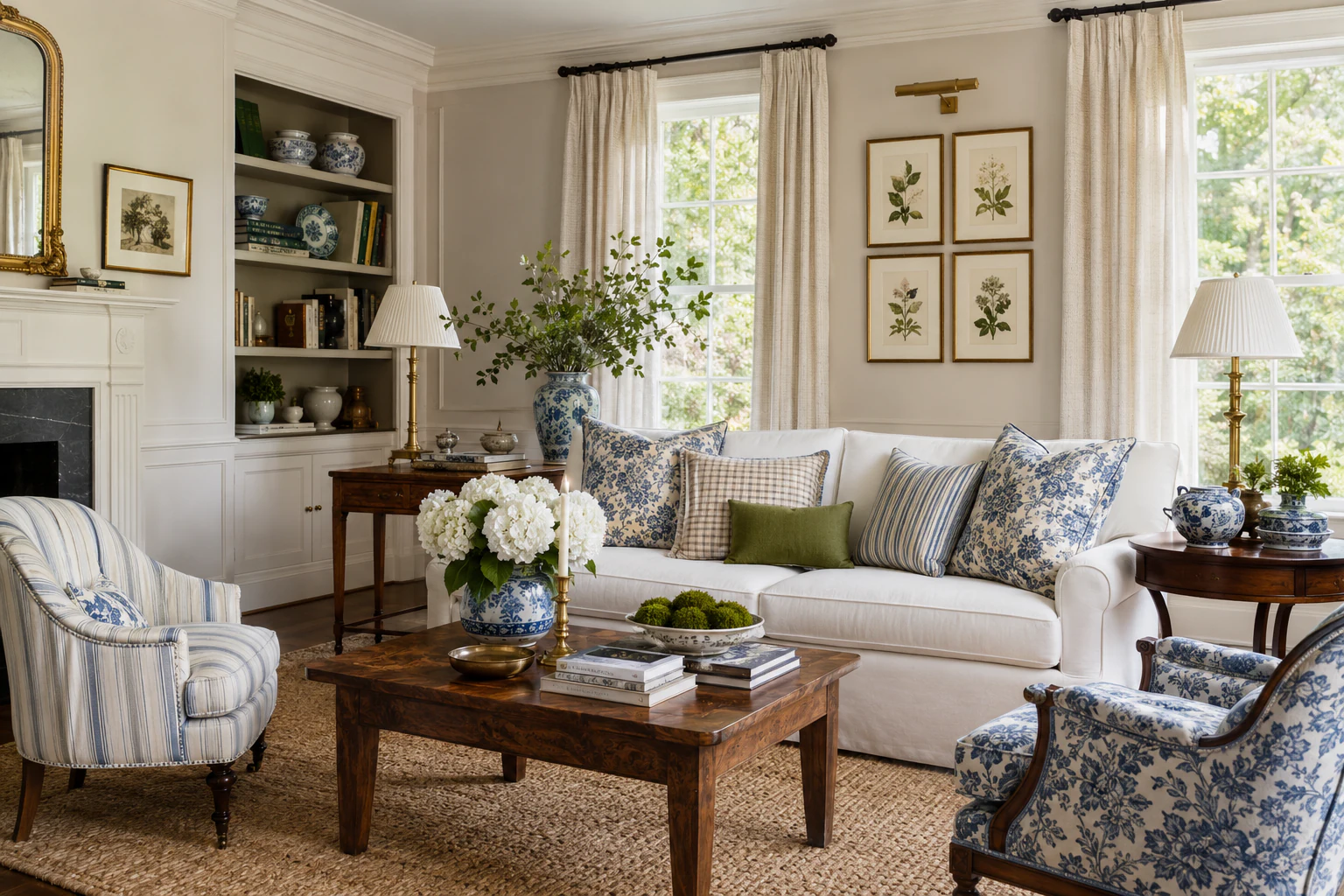
Repeat the room’s colors, but vary the materials.
A coffee table should feel connected to the room without matching every surface around it. Pull one or two colors from the textiles or art, then add contrast through wood, ceramic, brass, glass, wicker, or a painted finish.
If the room already contains many patterns, keep the tabletop shapes simple. If the room is quiet, books and small objects can introduce more color and detail.
See Collected Traditional Living Rooms →STYLE BY TABLE SHAPE
Let the shape of the table guide the arrangement.
The same collection of objects can feel completely different depending on how it follows the table’s lines.
ROUND TABLE
Create a loose triangle
Arrange three groupings around the center: one taller vessel, one book stack, and one smaller bowl or object. Keep their heights different and leave space around the outer edge.
RECTANGULAR TABLE
Work in two or three zones
Place a book stack at one end and a vase or bowl near the other. A tray can become the third zone, or one section can remain completely clear.
SQUARE TABLE
Think in four quadrants
Style two or three quadrants and leave at least one open. Avoid placing one small object in the exact middle, which can make the surface feel unfinished.
UPHOLSTERED OTTOMAN
Contain the arrangement
Use one sturdy tray to create a level surface, then keep the contents simple. A small vase, a lidded box, and coasters are usually enough.
HEIGHT, SCALE, AND SPACING
Create variation without blocking the room.
Most coffee table decor should remain low enough for comfortable conversation and a clear view across the room. One moderate-height piece adds shape, but it should not become a visual wall.
- Use three general heights. Combine a low tray or bowl, a medium book stack, and one taller vessel.
- Favor fewer substantial pieces. Three confident groupings usually feel calmer than ten tiny objects.
- Check every viewing angle. Walk around the room and make sure the arrangement feels balanced from the sofa, chairs, and doorway.
- Leave the table useful. Aim to keep roughly half of the surface open in a room used every day.
STYLE FOR REAL LIFE
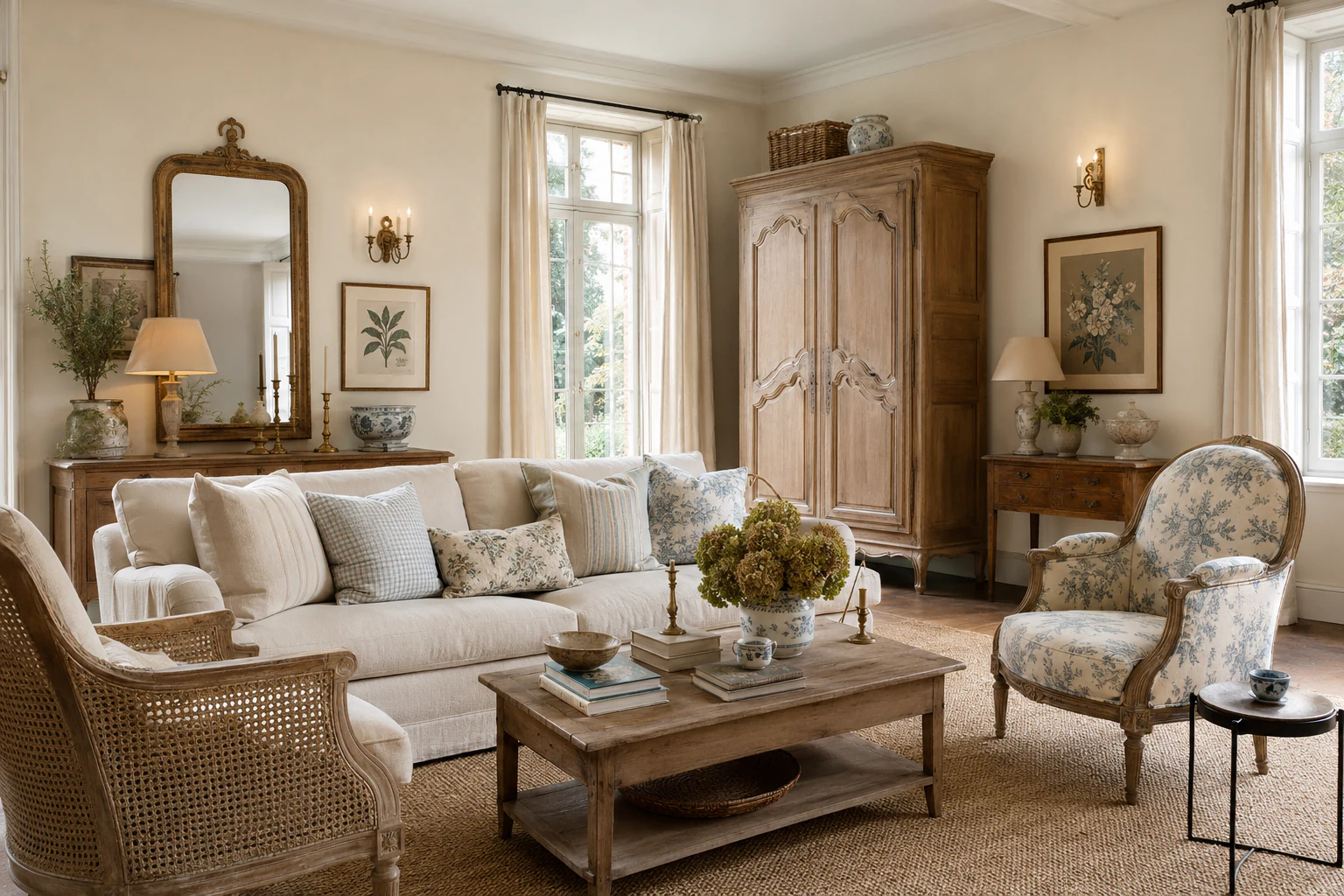
A beautiful coffee table should still work for your household.
In a family room, make the arrangement easy to move. Keep the main pieces on a tray, choose a low stable vase, and use a lidded box for remotes or small toys. Avoid fragile objects near the edge and leave enough room for snacks, homework, or a board game.
A formal living room can hold a little more detail, but the table should still look approachable. The best test is simple: could someone sit down and comfortably place a drink without rearranging the entire surface?
COMMON MISTAKES
What makes a coffee table feel off?
- Using too many small objects. Tiny pieces can read as clutter. Replace several of them with one larger bowl, vase, or book stack.
- Making every piece the same height. A flat arrangement lacks rhythm. Create a gentle rise from a tray or bowl to books and one taller element.
- Centering everything perfectly. Slightly off-center groupings feel more relaxed and collected than one rigid display in the middle.
- Covering the entire surface. Empty space is part of the composition and keeps the coffee table useful.
- Choosing decor unrelated to the room. Repeat a color, material, or mood already present so the table belongs in its surroundings.
- Forgetting the view from the sofa. Tall flowers and large branches may look lovely from the doorway but block conversation when seated.
THE FINAL EDIT
Style it, then remove one thing.
Once the arrangement feels finished, take away the least meaningful object. If nothing looks missing, the table is stronger without it. This final edit creates the breathing room that makes a layered arrangement feel intentional.
FREQUENTLY ASKED QUESTIONS
Coffee table styling questions, answered.
What should you put on a coffee table?
Start with a short stack of books, one object with height such as flowers or a vase, and one smaller personal or sculptural piece. A tray can contain candles, remotes, or coasters. Leave a generous part of the surface empty so the table remains useful.
How do you style a coffee table without making it look cluttered?
Use three to five visible groupings, repeat a limited color palette, and vary height without using too many small objects. Combine related items on a tray and keep at least one large open area for drinks, books, or everyday use.
How do you style a round coffee table?
Divide a round table into three loose sections. Use one taller element, one low stack of books, and one small object or bowl. Keep the groupings slightly off center so the arrangement follows the table’s shape without looking rigid.
How do you style a rectangular coffee table?
Think in two or three zones along the length of the table. Balance a stack of books at one end with a vase or bowl near the other, then use a tray or smaller object to connect the arrangement. Leave one end or the center open for practical use.
Should a coffee table tray be round or rectangular?
Contrast often works well. A round tray softens a rectangular table, while a rectangular tray adds structure to a round or upholstered table. The tray should be large enough to hold a useful grouping without covering most of the surface.
How tall should coffee table decor be?
Most pieces should stay low enough that people can see across the room comfortably. Add one moderate-height element for shape, but avoid a tall arrangement that blocks conversation or the television. Low bowls, short vases, and compact flowers are usually easiest to live with.